We can improve the measurements by averaging multiple measurements of the same sequence (granted with the same pre-cycle and magnet temperature).
Since the measurement acquisitions are triggered to start at 100.10 mV, the measurements will always be triggered at the same phase of the 50 Hz, which means that if we are acquiring at 10 kHz we might be up to 200 samples (20ms) misaligned.
Measurement 10 seems borked (nothing measured)
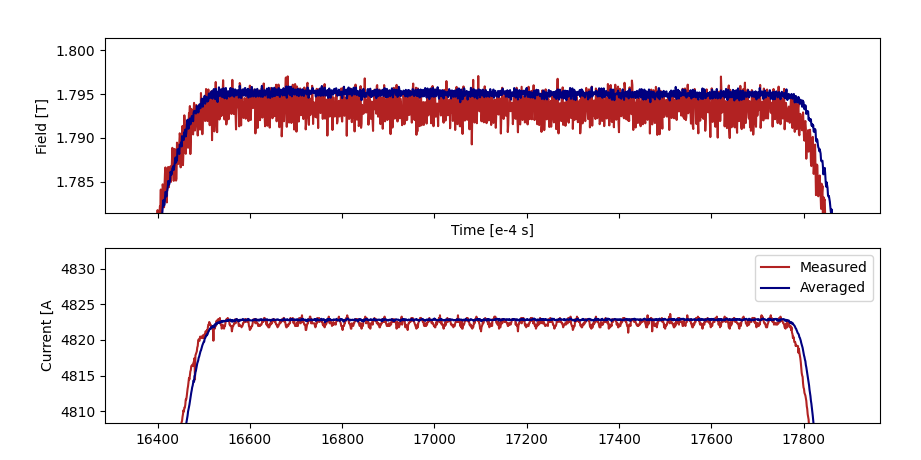
It seems the measurements are misaligned and by a few milliseconds, since average seems to lag behind measurement1.
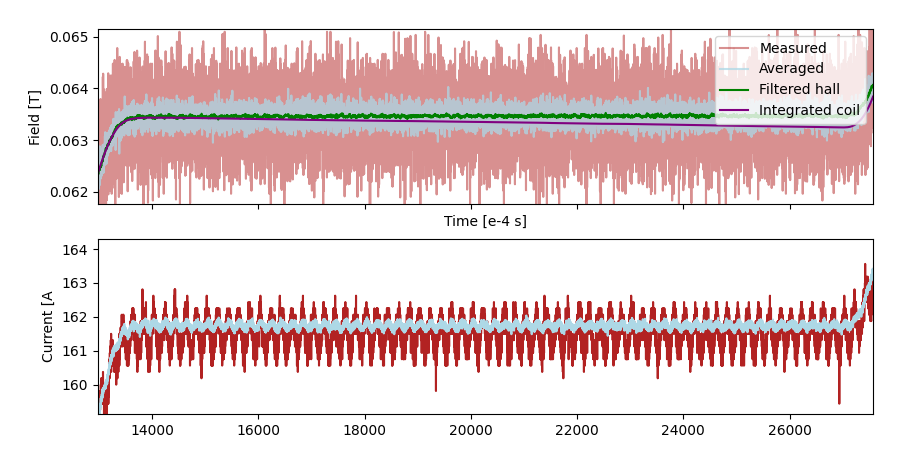
We see here how clean we can get the coil measurement, however it’s still drifting quite a lot.
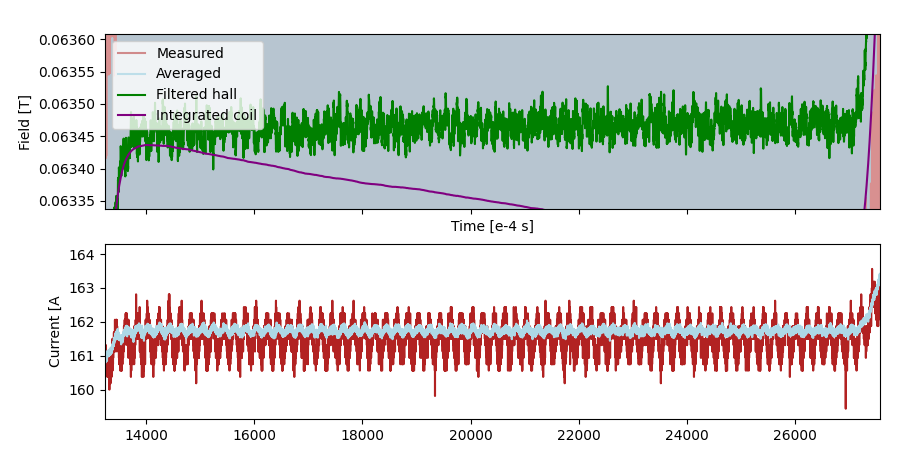
For the peak-to-peak noise wecome within 8e-5 T, which is a significant improvement over the 2e-4 T from using just the average hall from one measurement
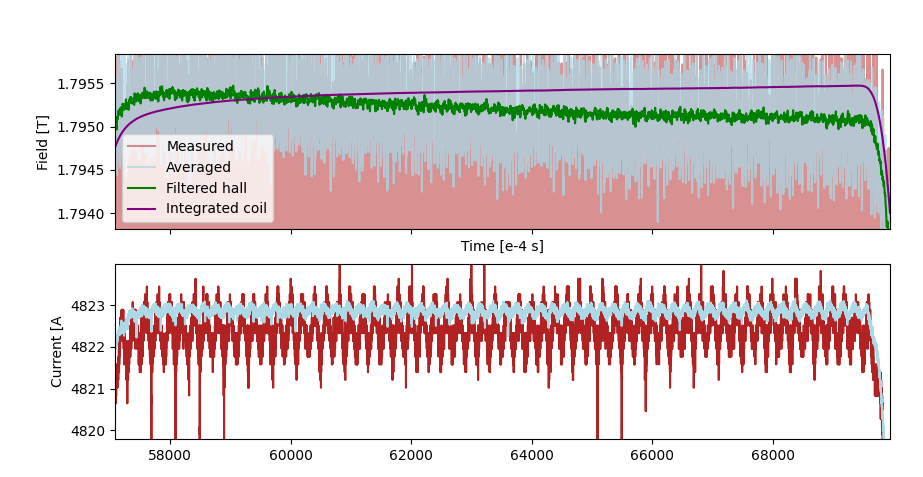
Here we see a decrease in the field at flattop (green), whereas the coil seems to “decay” upward, similar to eddy current decay. Some of it can be drift, but there is suggestion that we have eddy current decay here
Inconsistent measurement readings
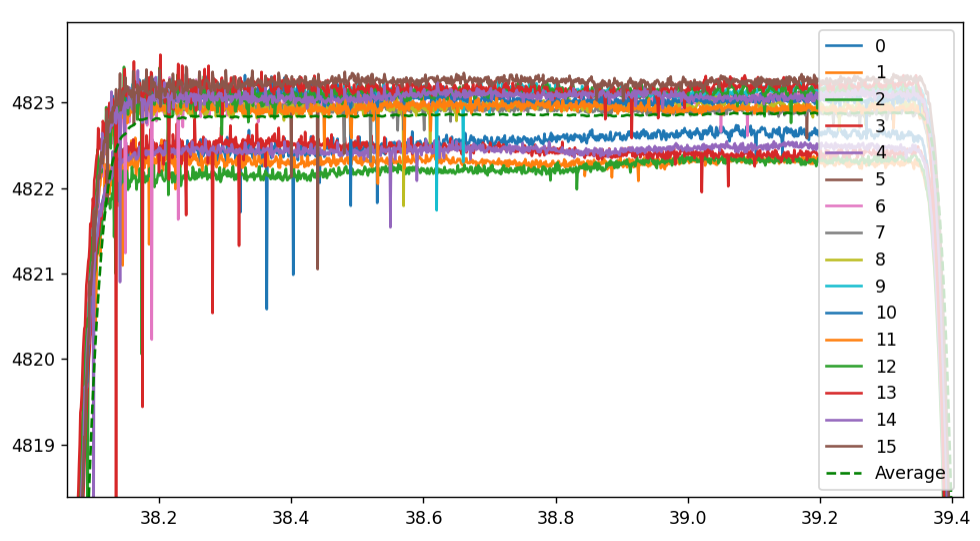
After filtering the measured currents, we can see the measured current amplitude at flat top, which can deviate from the average by up to 0.5 A in either direction, which equates to , which is significantly more than our tolerance.
Maurus proceeds to record data across the whole day, to capture variances of flat-top current across time.
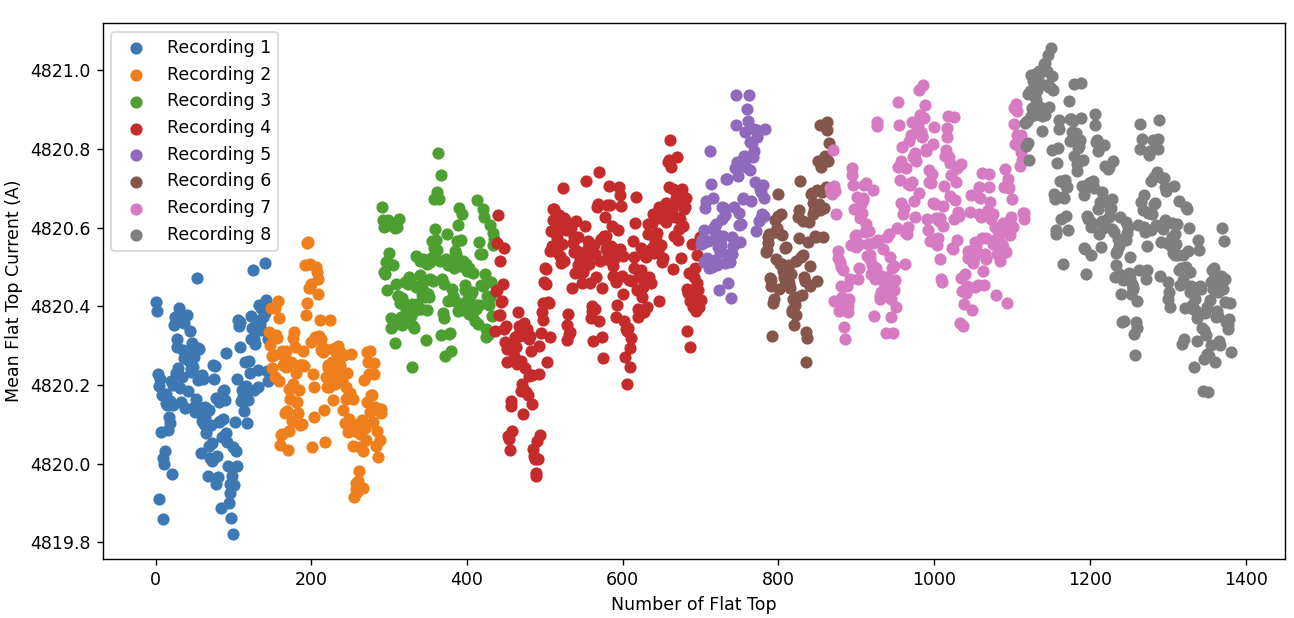
Notice here as the current drifts upwards 1A.