We use Tirsis parallel MD slot 08:00 - 08:30 to see if it’s the chromaticity that makes the beam unstable at SFTPRO injection, as observed during the Dedicated MD 2025-07-09.
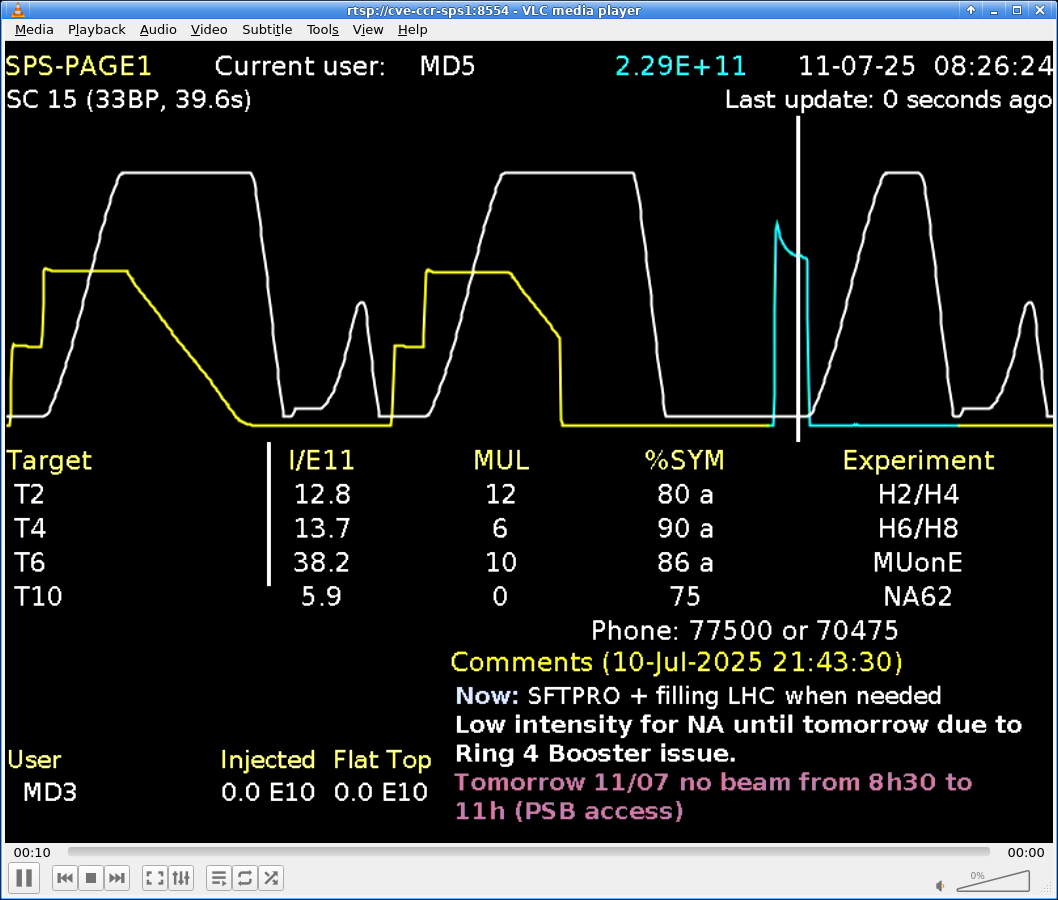
We use a SHIP cycle which injects at 200 ms at 14 GeV, and has the MD3 cycle (MD1 but with flat dipoles).
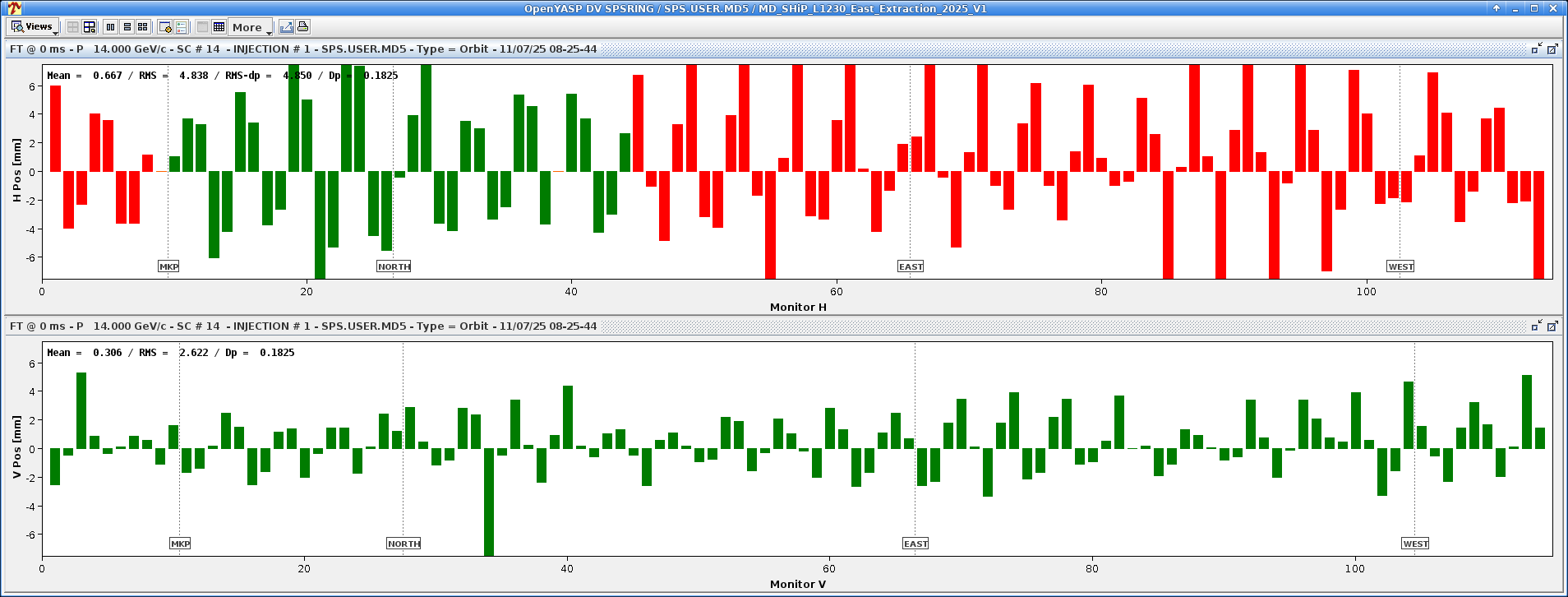
By increasing the field by 1.2 G as found during Dedicated MD 2025-07-09, we center the beam at the first turn.
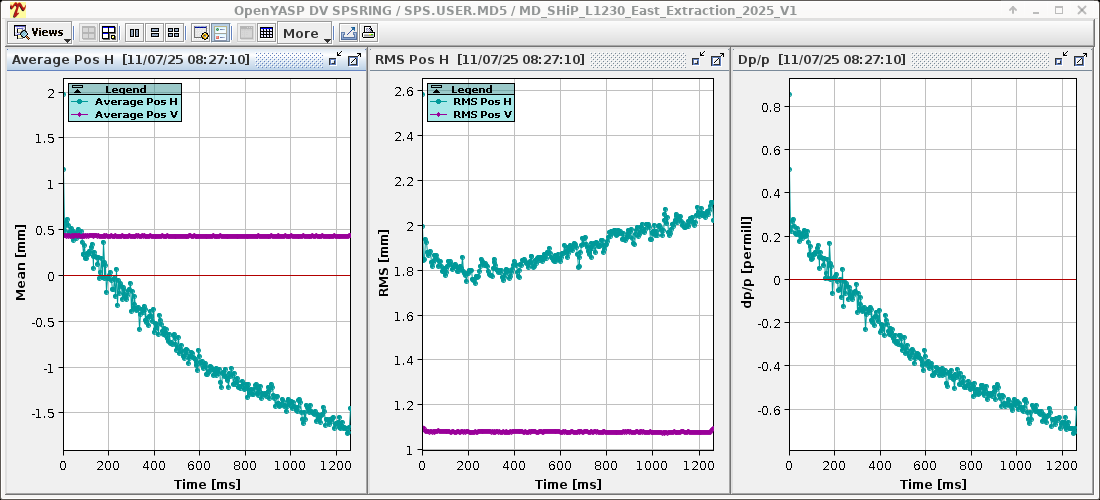
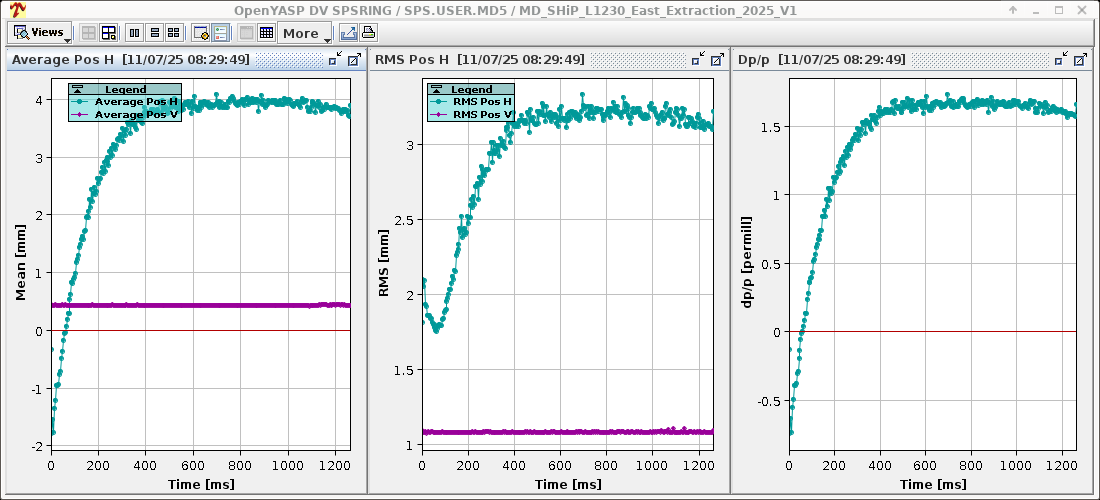
Since there is a momentum ramp at the SHIP injection just as for the SFTPRO, we see a decrease in orbit after injection, according to the momentum ramp.
Retrieving the orbit from NXCALS, we see the following orbits at injection
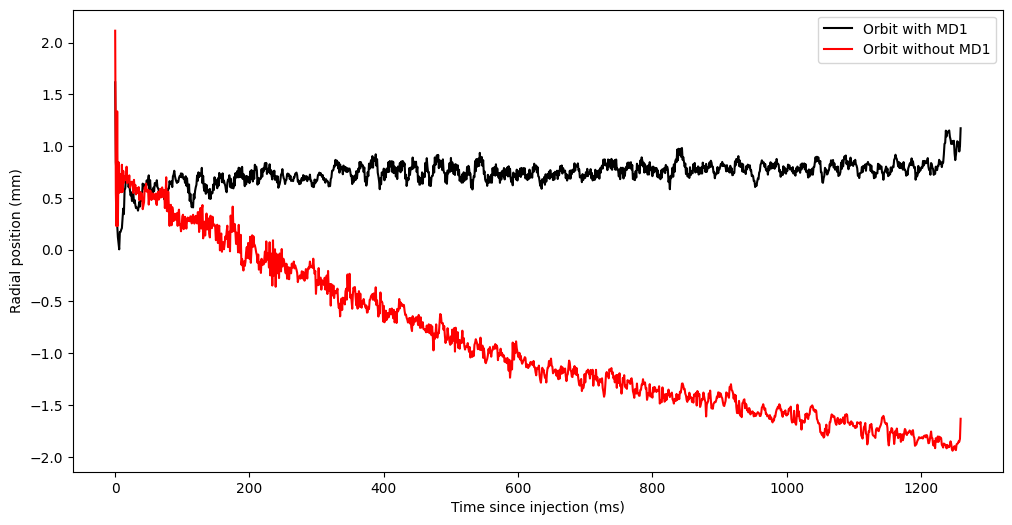
Where both beams are centered at injection (so manual shift of injection field)
Looking at the supercycle structure
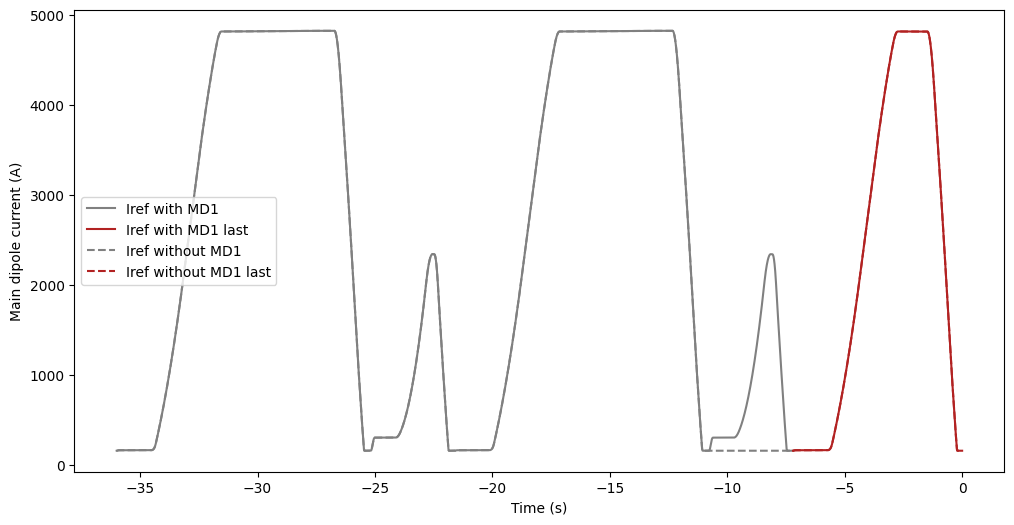 We see that the only difference between the two sequences is the main dipole cycle on the MD1.
Eddy current modeling and fit
Fixed time constants fitted on orbit
Using the parameters from OLD SPS main dipoles eddy current parameter fitting, without optimizing time constants
C_fit = np.array([-0.000918377, -0.000350356]) * 1e-4
TAU_fit = np.array([0.532, 2.72])
We observe the following eddy current fields:
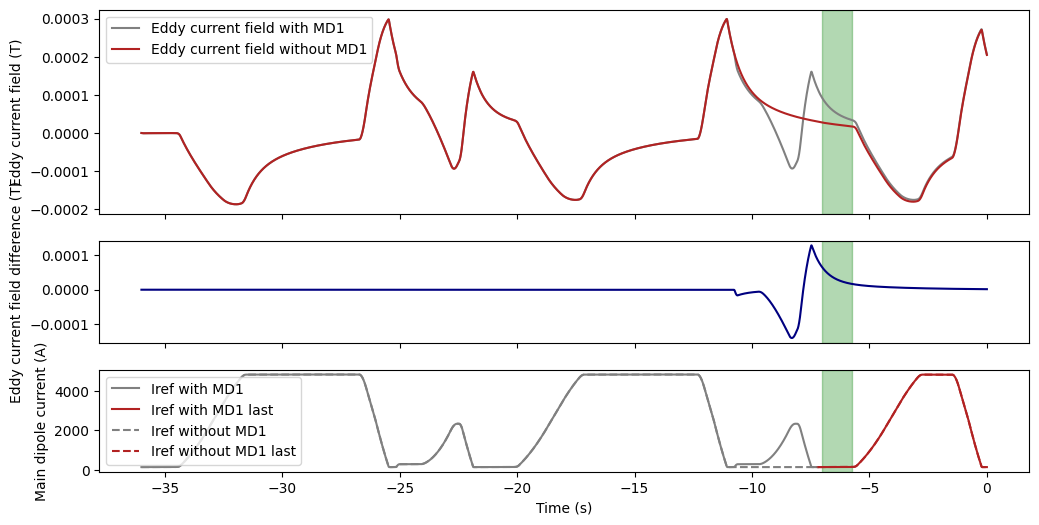
Translating to looking at the relative orbit between the two orbit acquisitions (since there was a momentum ramp in both acquisitions, so we don’t see the decaying effects on the orbit directly):
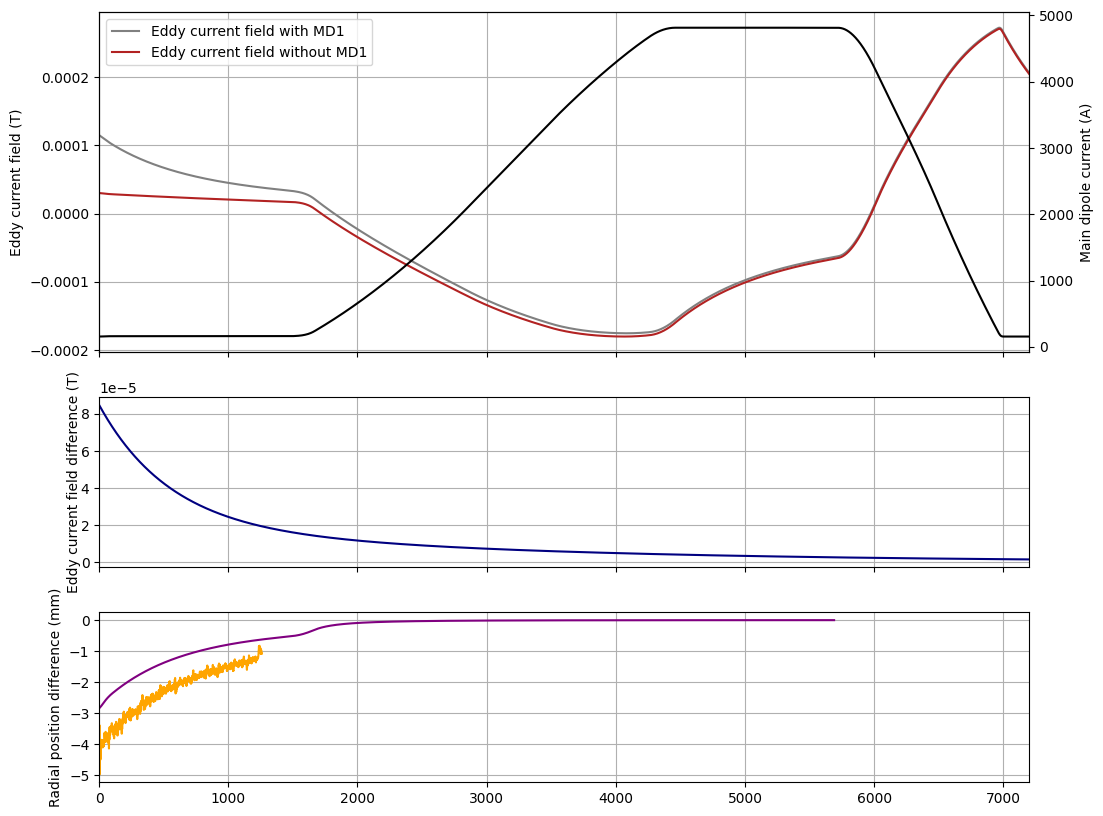 We see that the difference between the theoretical orbit decay caused by eddy currents (notice here the sign change from to ) follows a similar decay rate. I.e. The decay constants are correct.
Fitting time constants on first turn
When not freezing the time constants when optimizing eddy current fit on first turn, we end up with a correction looking like
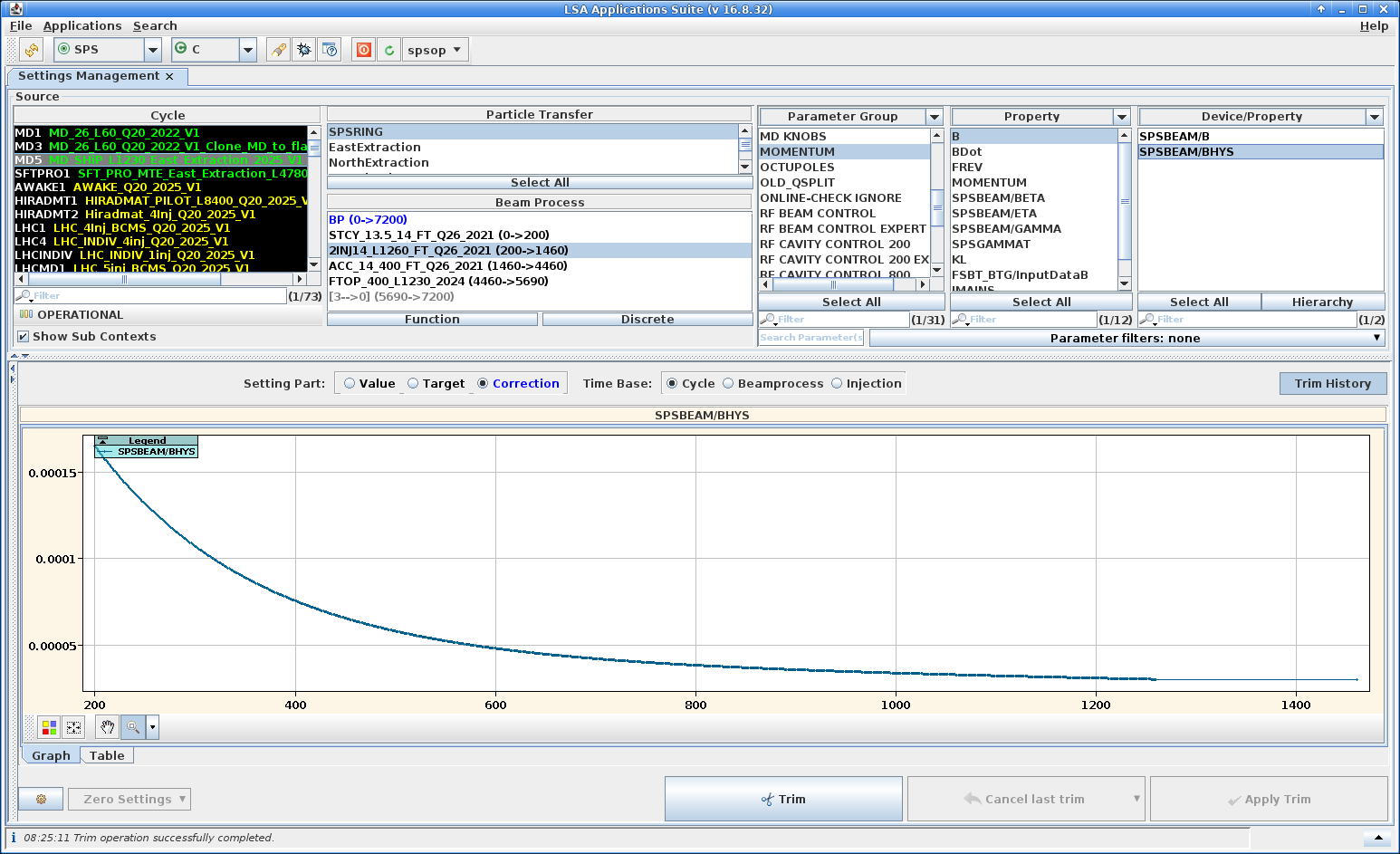
Which yields an orbit like
Which makes the orbit decay too fast and too much. This again suggests we have to fit the decay time constants on the beam.