Meeting topics
During the meeting the main topic was the inconsistencies in measured B at flat bottom of SFTPRO cycles:
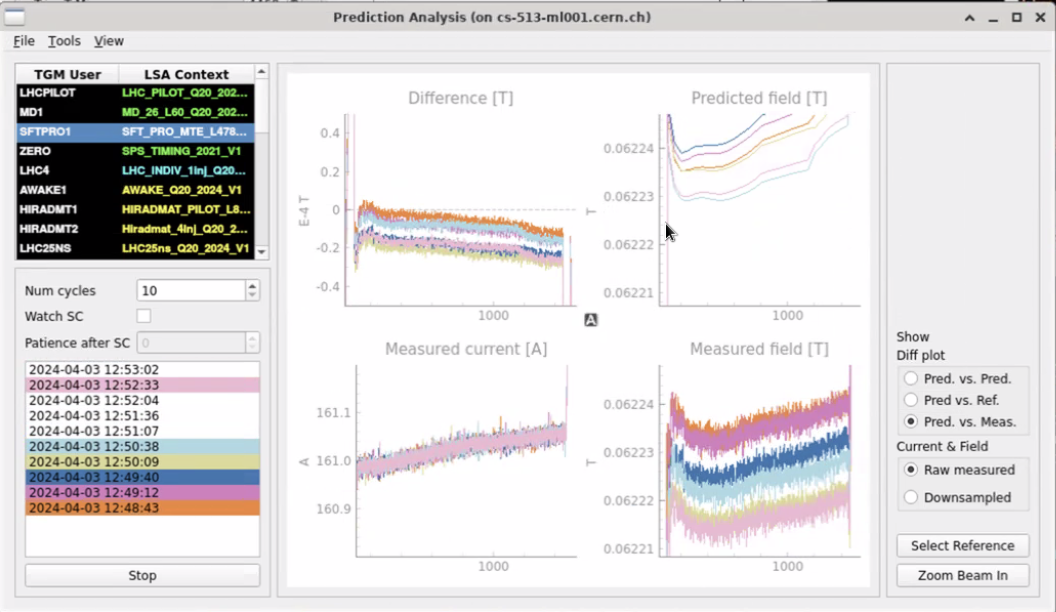
The field varies by +/- 2E-5 T, which is in the order of what we want to correct. The phenomenon occurs even after field should have stabilized (in this case after 40 supercycles of the same).
Outcome
B-Train markers are applied when the field crosses 1100 G (1.1E-1 T), and has to be Applied during a ramp. This is because of the marker which requires the field to be ramping in order to extract a resident peak. The flat bottom of SFTPRO is at 6E-2 T (600G) and is therefore before the marker is applied. This means that flat bottom of SFTPRO as before the marker is applied and therefore has all the accumulated drift from the cycle preceding it. The marker is applied at C1635 with +/- 75ms window where it can be applied, which is during the ramp.
The field value when the marker is applied (1100 G) is fixed and cannot be changed.
This is mainly a problem for SFTPRO since the flatbottom is at 600G, wheras for other cycles like LHCPILOT, flat bottom is just above 1100G, and the marker is applied when the field ramps from idle current to injection plateau.
In principle, the application of the marker should not be seen by the user as the application of the marker could be anywhere between 0.2G and 1.6 G, however by looking at the calibration function tuner application, we can see clearly where the markers being applied.
Potential solutions
Fury one could apply the marker at ramp down however this would cause inconsistent effects due to partial or full economy of the cycles. For SFTPRO during MDs we could theory apply the marker at the MD1 ramp down since MD1 is always preceding SFTPRO for consistent fields as flat bottom.
An additional solution extend the window where the markers applied to the entire cycle. This means that the marker could be applied at either ramp up or ramp down. This is not a robust solution as noise measured across the whole cycle could cause unintentional marker being applied.
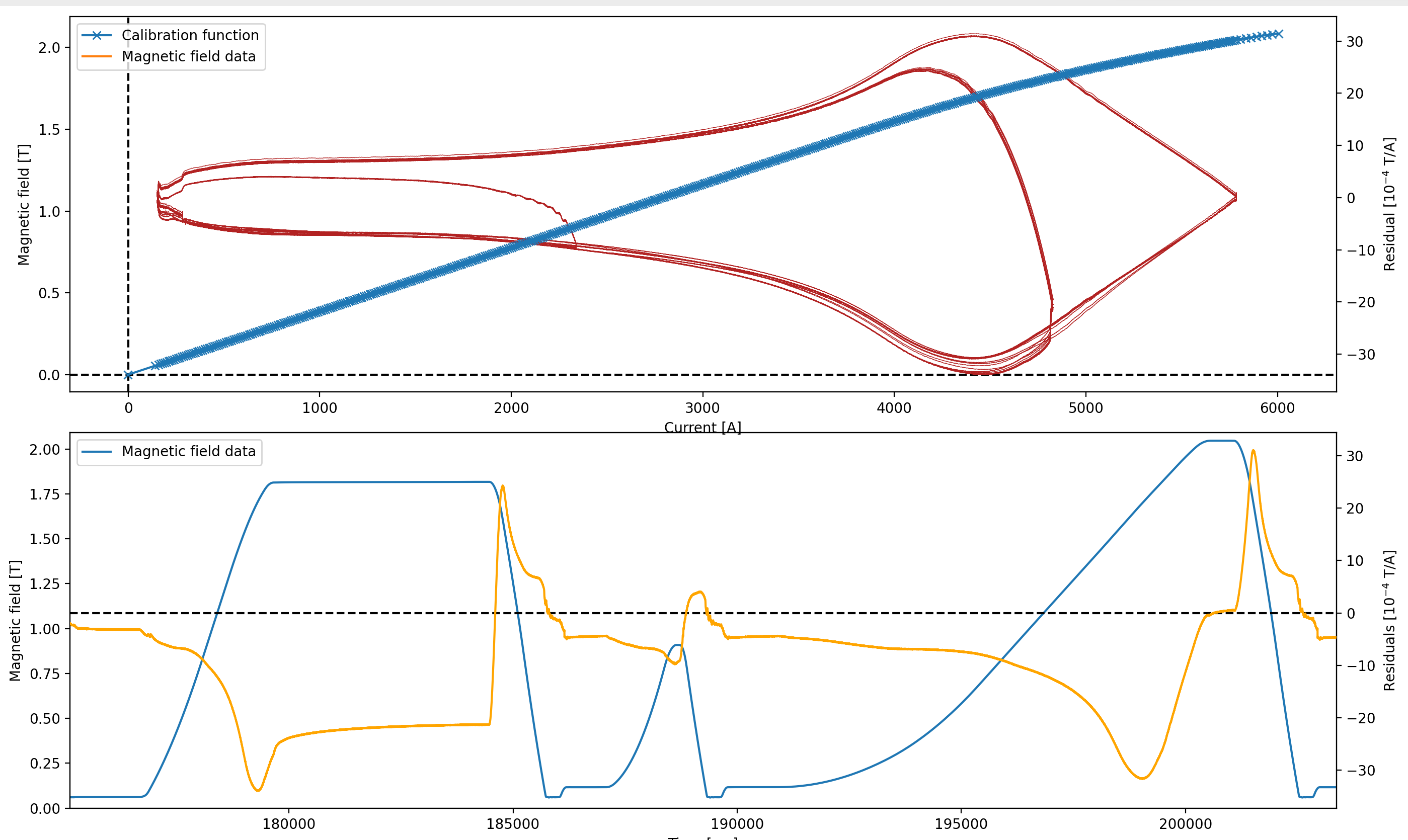
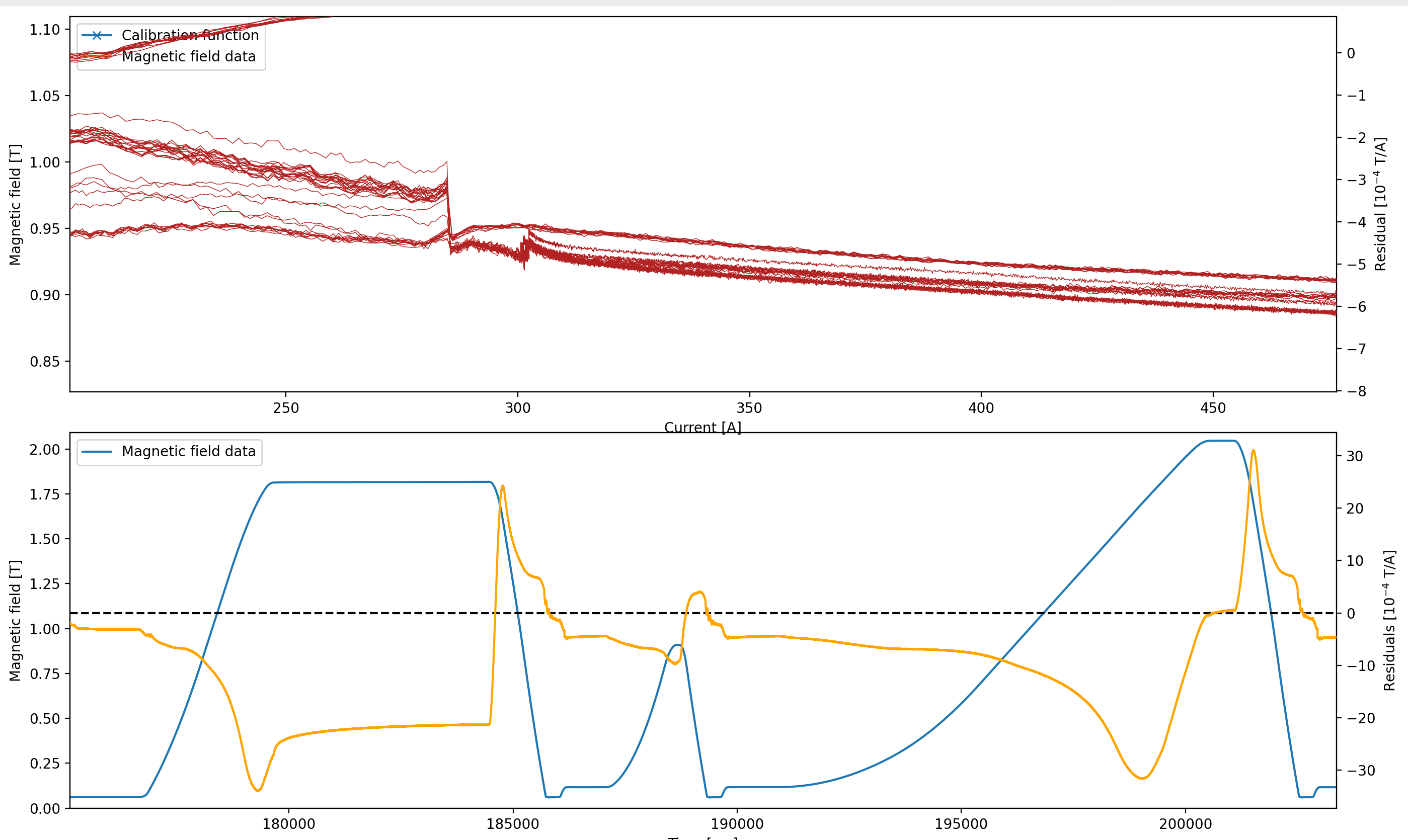
Zoomed in to around 300A, which corresponds to 1.1E-T (1100G) in field, where we can also see the field being more “spread out” before, and then concentrated the moment the marker is applied, as they now have the “same” field.
Action
Discuss with Verena when it’s best to apply markers during the cycle. Is it worthwhile to apply the marker at the ramp downs or extend the window across the entire cycle?
Quantify uncertainty of measured field at flat bottom by overlay plots and visual using standard deviation.